Showing posts with label Social Science. Show all posts
Showing posts with label Social Science. Show all posts
Thursday, May 28, 2020
Tuesday, March 31, 2020
Spanish Virtual Museums to visit from home
Going to a museum no longer requires being in the actual place. Although there is nothing like going through galleries and rooms discovering historical curious facts or great works of art, this is no longer the only option. Thus, it is possible to take virtual tours in some of the most important museums without having to leave your home. Below is a list of links to museums in Spain that have great virtual tours.
1. National Archaeological Museum (Madrid)
Next to the National Library, one of the most beautiful in Madrid, is the physical headquarters of the National Archaeological Museum. It houses a huge collection that allows you to travel back in time from prehistoric times. Thus, you can get to know the cultures that have shaped the country, from the Neolithic to the medieval ones, including the classics. Among its pieces there are wonders such as the Bicha de Bazalote or the Dama de Elche. Fortunately, its virtual tour is one of the best you can find. There is also an interesting mobile application that lets you review it through panoramic views.
2. Museum of Natural Sciences (Barcelona)
This museum is a very diverse and scientific review of the best of nature. This virtual visit comes from an initiative between the institution from Barcelona and Google. Between them they have created a digital site that goes through a digital map, reports and photographs of the area.
3. Oceanografic (Valencia)
Do you like the sea and its creatures but you can’t leave land? No problem. The Oceanogràfic of Valencia allows you to see its different enclosures and rooms in a very detailed way thanks to a virtual reality review. In a very intuitive way you can “walk” its streets and widen the information through photos. A map allows you to jump from one side to another quickly. Sharks, seals, flamingos, tropical fish… Everything is just a click away!
4. Picasso Museum (Barcelona): Collection and the Virtual itineraries
In this Picasso museum, the attention is focused on Picasso’s training stage, which lets you know him from the inside out. The collection is the largest in existence and is well collected on the institution’s website. In addition, virtual itineraries are suggested that allow visitors to get to know the courtyards of the buildings that make up the area and the Barcelona associated with the genius of the capital of ‘la Costa del Sol’.
5. San Fernando Royal Academy of Fine Arts (Madrid)
This institution was born in the early stages of the Bourbon monarchy in Spain. Its development came from initiatives from the time of Philip V, brought to life thanks to Ferdinand VI. This led to one of the country’s great artistic institutes. The San Fernando Royal Academy of Fine Arts developed considerably with Charles III and his heirs. It survived the republican periods, already established as a centre of reference, and now has an extensive collection. This can be seen perfectly thanks to the great virtual tour they have created. It is very well designed, as it could not be otherwise, and combines static panoramic views with 360 mapping to go through its different floors.

Friday, March 27, 2020
The Boston Tea Party - Social AND Natural Science
The Boston Tea Party was a protest by the American Colonists against the British government. It occurred on December 16, 1773. It was one of the key events leading up to the American Revolution. Read more about this important event in the history of the United states here.

Boston Tea Party Science Experiment
Now that you know about the Boston Tea Party, try this science investigation. Inspired by the Boston Tea Party, this experiment will help you learn about th the reports of eyewitnesses. You will get to experiment with various types of tea in warm and cold water and in fresh and salt water.
Wednesday, March 18, 2020
Construct a Roman Aqueduct in your home!
What does a growing city do when they’re not located on a river or when their river is too polluted to use for fresh drinking water and bathing?
In the face of these challenges, the Roman Empire built aqueducts, brilliantly-designed ancient water bridges that provided clean water to highly populated areas.
These engineering wonders were so well built that many are still standing today.
Have you ever been to Segovia, Spain? It is one of the best-preserved elevated Roman aqueducts in the WORLD - and only 94 km away from Madrid!
 |
| The Roman Aqueduct in Segovia! |
Read more information about aqueducts:
Though earlier civilizations in Egypt and India also built aqueducts, the Romans improved on the structure and built an extensive and complex network across their territories. Evidence of aqueducts remain in parts of modern-day France, Spain, Greece, North Africa, and Turkey.
Aqueducts required a great deal of planning. They were made from a series of pipes, tunnels, canals, and bridges. Gravity and the natural slope of the land allowed aqueducts to channel water from a freshwater source, such as a lake or spring, to a city. As water flowed into the cities, it was used for drinking, irrigation, and to supply hundreds of public fountains and baths.
Roman aqueduct systems were built over a period of about 500 years, from 312 B.C. to A.D. 226. Both public and private funds paid for construction. High-ranking rulers often had them built; the Roman emperors Augustus, Caligula, and Trajan all ordered aqueducts built.
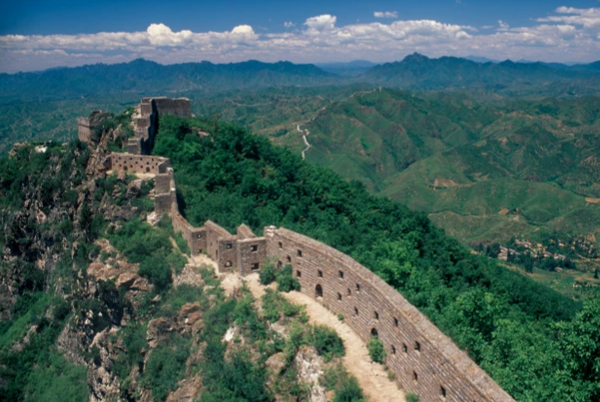
Go on a Virtual Field Trip!!!!
Over 30 Virtual Field Trips with Links
(Click on colored text for links. Safe Travels!)








Monday, March 16, 2020
Practice Spanish Geography with these interactive maps!
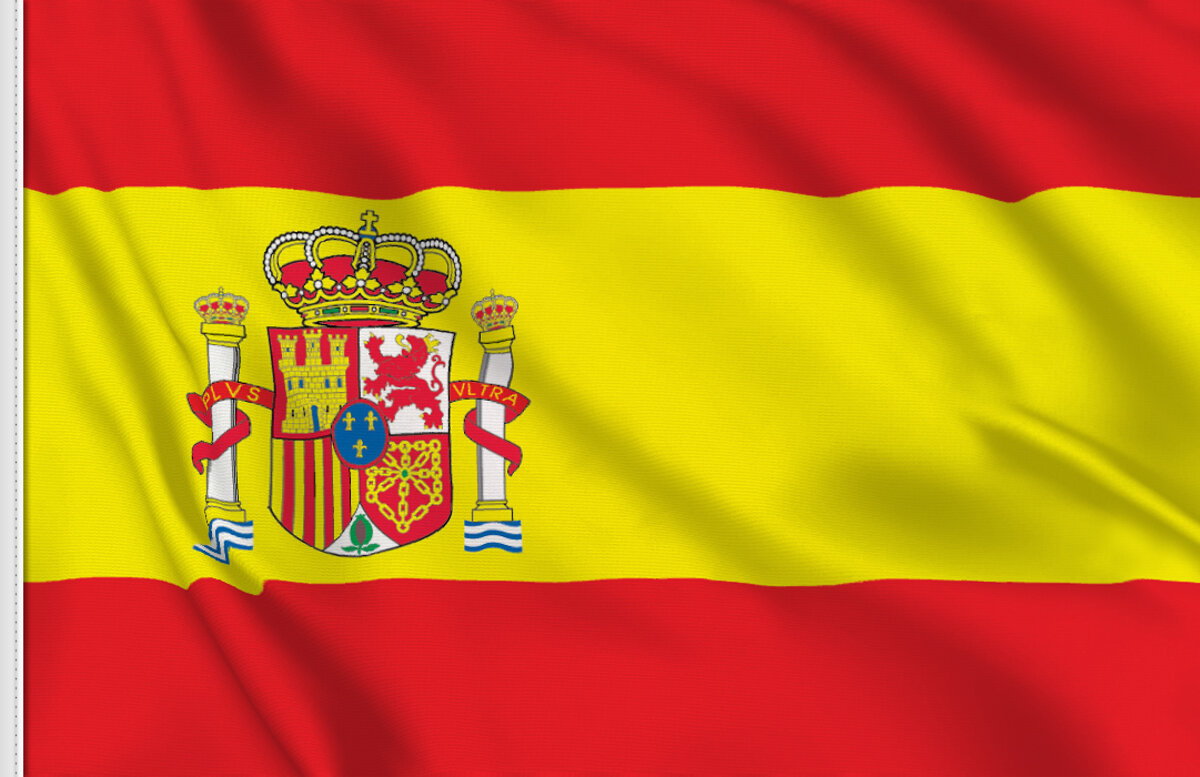
→Provinces of Spain←
Spain has 50 provinces, most of which are on the Iberian Peninsula. There are a few provinces, however, that are islands. Spain’s African cities, Ceuta and Melilla, are not officially designated as a province. Each province has its own character and history, and some of them even have their own language. The best score ever recorded for this game is 100% in 59.89 seconds. Can you beat that?
→Autonomous Communities of Spain←
Spanish is not the native language of everyone in Spain. That is because the country has many autonomous regions with their own languages, such as Galician, Basque, and Catalan. In this map game you will learn how to identify the various autonomous communities. The best score ever recorded for this game is 100% in 14.48 seconds. Can you beat that?
→Capitals of Spanish Provinces←
There are autonomous communities, which are then divided into 50 provinces. Each province has its own administrative capital. The best score ever recorded for this game is 100% in 1 minutes and 4 seconds. Can you beat that?
→Rivers of Spain←
The rivers of Spain contribute a great deal to the country's geographic diversity. They beautify the landscape, and many irrigate the fertile valleys that are used to grow olives, grapes and other crops. There are over 1,800 rivers in Spain, but this map game focuses only on the largest ones. The River Ebro isn't the longest, but it carries more water than any other Spanish river. The Guadalquivir is one of Spain´s most famous rivers. It passes through the cities of Seville and Cordoba, and some of the inland parts of the river are navigable, making Seville the only inland port in Spain. From the Guadalhorce in the south to the Eo river in the north, this quiz game will help you explore all 26 major Spanish rivers. The best score ever recorded for this game is 100% in 27.83 seconds. Can you beat that?
→Bonus: Districts of Madrid!←
Madrid, Spain's capital city, is home to an impressive collection of European art and world-renowned architecture. It's divided into 21 districts. One of the largest is the district called Fuencarral-El Pardo; part of this district is set aside as a royal hunting preserve. The district of Salamanca is located near the historical center of Madrid and is a core section of the city. Take a close look at how Madrid is split up with the help of this map quiz; in no time, you'll be an expert on the districts of Madrid. The best score ever recorded for this game is 100% in 18.48 seconds. Can you beat that?
Subscribe to:
Posts (Atom)